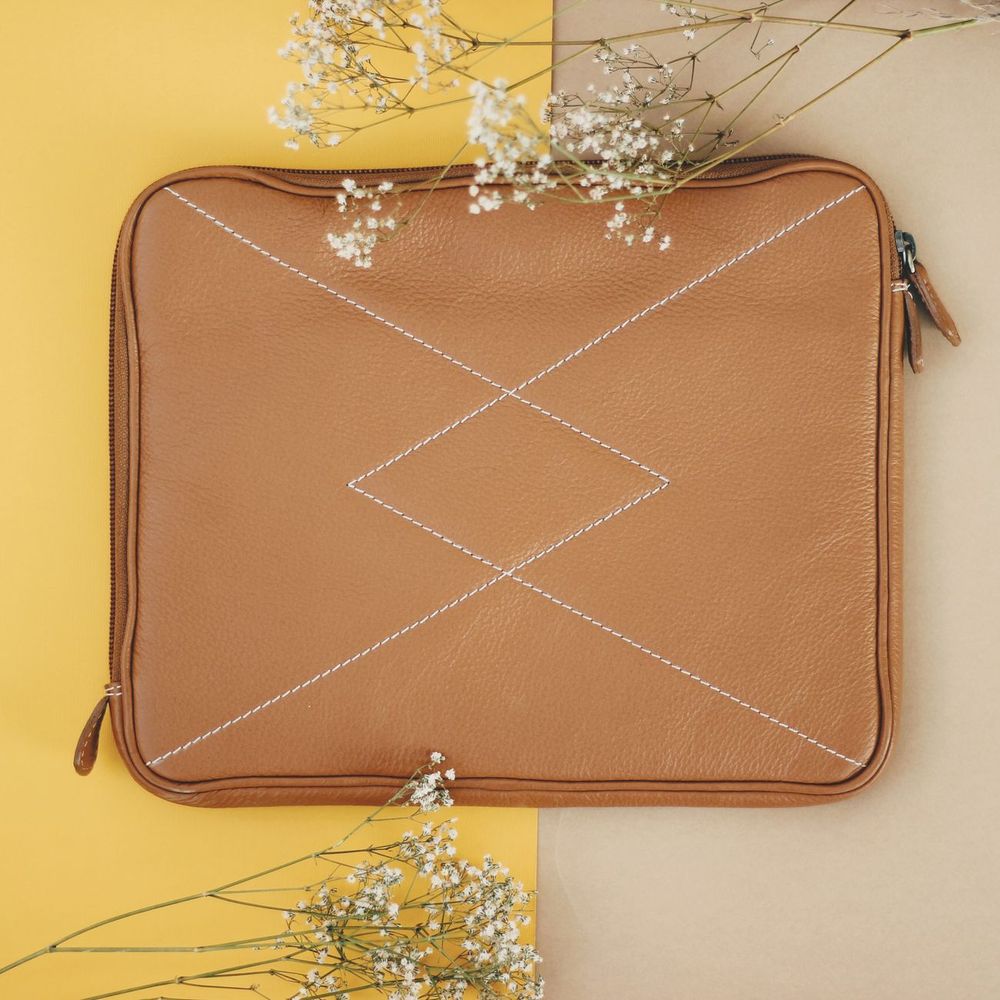
Behind every well-made backpack lies a process: here are the questions driving the NZ project.
A backpack seems like a simple object. Then you start studying it properly — the stitching, the zips, the weight distribution, the fabric — and you realise it is among the most difficult accessories to get right. That awareness drives the NZ Backpack project: an internal study into how to build a backpack that doesn't give out after a year, sits comfortably on the shoulder and holds its own in an office as naturally as in transit.
The market is growing steadily: according to Mordor Intelligence, the sector is projected to reach USD 29.56 billion by 2030, at a CAGR of 6.34%. The premium segment is growing fastest, while data from Pambianco News shows backpacks recorded a 3–5% increase in wholesale orders in 2024. The context is favourable, but context alone doesn't make a good product.
The first challenge in any backpack project is the material — not for aesthetic reasons, which come later, but structural ones. The wrong fabric compromises weight, abrasion resistance and water repellency all at once.
High-density nylon and cordura remain the established benchmarks for robustness. Cotton canvas offers a warm visual quality but requires additional treatments against moisture. rPET (recycled polyester from plastic bottles) has emerged as a concrete alternative: equivalent performance, reduced environmental impact. Within the NZ project, every candidate material is evaluated across three axes: weight per square metre, tensile strength and behaviour after repeated washing.
The zip deserves its own chapter — it is the component that fails first. YKK zips are the industry reference for longevity, but the reinforcement of the attachment point to the fabric matters just as much, absorbing tension every time a pocket opens or closes.
A backpack's dimensions are never neutral. One that's too large encourages overpacking and poor weight distribution; one that's too small becomes daily frustration. The NZ project focuses most carefully on the 20–26 litre range: enough for a 15-inch laptop, a light jacket and a full day's essentials, without crossing into trekking territory.
Shoulder strap ergonomics is routinely underestimated in the accessible segment. Flat, rigid straps transfer weight onto the trapezius rather than distributing it across the back's muscle mass. The NZ Backpack calls for contoured straps with differentiated padding — denser at the shoulder, softer along the side — and a gentle curve that follows natural posture.
On compartment logic, the guiding principle is access hierarchy: what you use most often must be reachable without opening the main body. The laptop compartment must be separate and padded, not merely an internal sleeve without protection. Every choice must answer a real use case, not a feature checklist designed to impress on a product page.
A premium backpack doesn't distinguish itself through logo presence — if anything, through its absence. The NZ Backpack follows a minimal direction: clean silhouette, neutral palette (anthracite, sand, muted military green), matte metal hardware. No gratuitous decorative detail. Aesthetics emerge from functional constraints rather than override them.
The 2025 trend confirms this direction: the most appreciated collections focus on essential lines, timeless finishes and versatility that makes the bag appropriate in a business setting just as naturally as a casual one. The goal is not a backpack worn for one season, but a companion that improves with use.
High-density nylon, cordura and quality rPET are the most reliable choices for abrasion resistance under load. The zip matters equally: look for components with reinforced attachment points where the hardware meets the fabric. The back panel and shoulder strap material is as important as the outer shell.
Check the stitching (even, no skipped threads, reinforced at stress points), the zips (smooth action, solid pull tabs) and the rigidity of the shoulder straps. A structured mesh back panel is a positive signal in this price range.
Significantly, but not linearly. The most meaningful quality jump happens in the €150–€300 range, where materials, zips and padding systems genuinely change. Above €400 you are also paying for the name. Accessible luxury works precisely in that middle window: real quality, without the brand premium.
The NZ Backpack project is not yet a finished product: it is a research process made of prototypes, tests and revisions. Genuine quality is not improvised — it is built.
Anyone curious to follow the evolution of this project — and to discover the curated selections that LUX LAB updates regularly — is welcome to explore the LUX LAB VIP area or to contact the team directly for a dedicated consultation.
Image credits:
MADEINEGYPT.CA · Pexels · Pexels
Gül Işık · Pexels · Pexels
Nada Bastawi · Pexels · Pexels
This article is also available in Italian. Leggi questo articolo in italiano ›
Accessible luxury, from Tuscany to the world